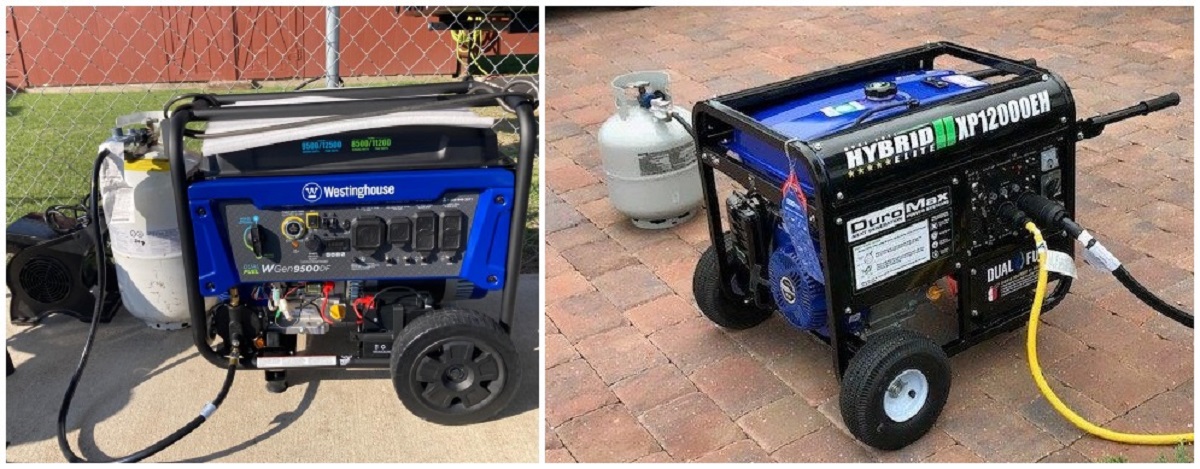
Investing in a portable generator is a wise decision to ensure power supply during emergencies, outdoor activities, or while on the go. In this blog, We will be reviewing and ranking the best portable generators based on real user feedback and in-depth reviews to help you find the perfect fit for your needs.
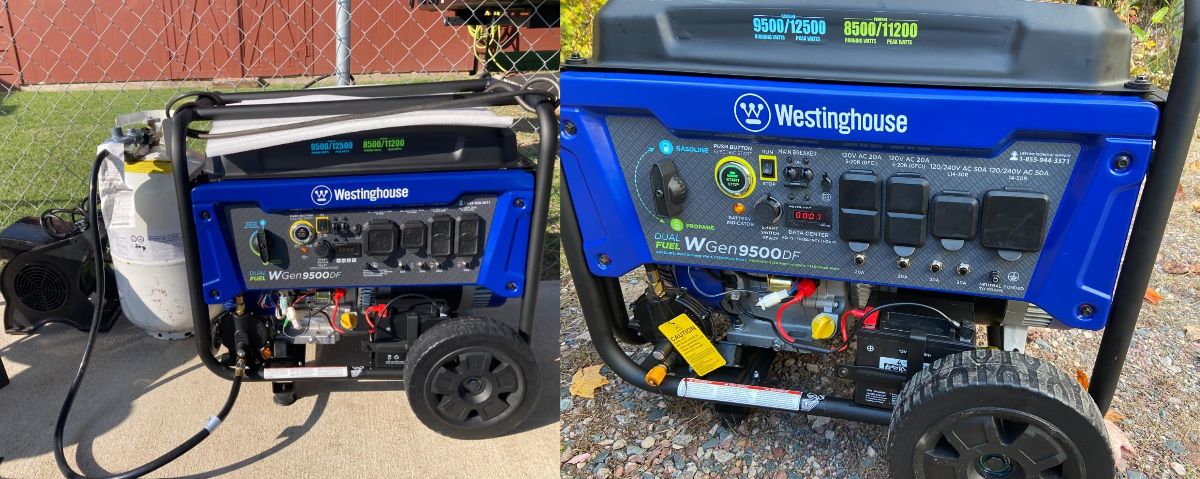
1. Westinghouse 12500 Watt Dual Fuel Portable Generator
Why We Picked It
The Westinghouse WGen9500DF stands out as a powerful, dual-fuel portable generator designed for whole-home or partial-home backup, job sites, and emergency readiness. With easy setup, remote start, strong output on both propane and gasoline, and a reputation for reliable performance, it’s a top choice for anyone who needs dependable power without stepping up to the cost of a full home standby system. Its build quality, user-friendly controls, and flexibility in fuel options make it especially appealing.
Pros
- Dual-fuel capability (gasoline or propane) for flexibility in emergencies
- Strong power output suitable for home circuits, well pumps, HVAC accessories, fridges/freezers, and tool loads
- Remote electric start that works consistently and adds convenience
- Straightforward setup and assembly; many users had it running within minutes
- Comes with extras like oil, funnel, battery charger, tools, and fold-down handle
- Surprisingly quiet for its size, comparable to other large portable generators
- Well-built and durable construction
- Ideal for manual transfer switch or interlock setups
Cons
- Heavy unit; delivery difficulties reported by some buyers
- Occasional shipping issues (oil residue, box damage, delays)
- Minor quality concerns like handle foam coming apart
- Altitude adjustments required for users above 2,000 ft—high-altitude carb and propane parts must be purchased separately
- Customer service responsiveness may vary
Who It’s For
- Homeowners seeking affordable whole-home or essential-circuit backup without investing in a full standby generator
- Those who want dual-fuel flexibility, especially users with large propane tanks
- DIY-savvy individuals installing manual transfer switches, interlocks, or inlet kits
- Job site users who need a heavy-duty generator with high output
- Anyone prioritizing reliability, long runtime, and remote start convenience
- Rural homeowners needing power for wells, freezers, furnaces, and essential household loads during outages
Helpful Review Insight:
Across multiple reviews, buyers consistently praised the generator for arriving in good condition, being easy to set up, and starting on the first try especially on propane. One user noted it integrated seamlessly with a 50A inlet and interlock kit and will be powered by a 250-gallon propane tank, making it a practical whole-home backup solution. Noise levels were said to be on par with other generators of similar size, and most appreciated the remote start and stop, which worked reliably.
Reviewers also highlighted the generator’s strong build quality, smooth operation, and ability to handle heavy loads like 30A circuits, multiple appliances, power tools, and home essentials. Several commented on the peace of mind it provides.
A few issues noted included:
- Delivery delays or mishandled shipping
- Minor cosmetic defects out of the box
- The need for high-altitude kits (carb jet and propane regulator) for users living above 2,000 ft
- Occasionally inconsistent customer service follow-up
Still, once running, even users who had initial issues were very satisfied with the performance and described it as a “powerhouse,” “well designed,” and a great value compared to expensive standby systems.

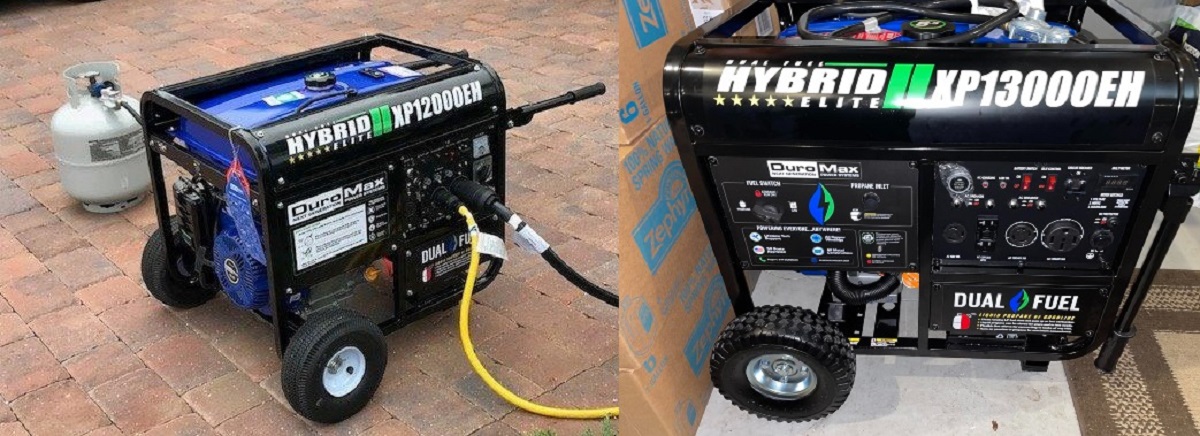
2. DuroMax XP13000EH Dual Fuel Portable Generator:
Why We Picked It
This generator stands out as an excellent choice for homeowners who want reliable backup power without overspending on a larger model they don’t actually need. Despite being one of the smaller units in its lineup, it delivers impressive performance for everyday essentials, portable AC units, refrigeration, entertainment systems, and household electronics. It’s easy to assemble, user friendly, and powerful enough to support multiple high-wattage devices at once. For first-time generator buyers, it offers a great mix of value, capability, and simplicity.
Pros
- Handles multiple appliances at once including portable AC units, refrigerators, freezers, dehumidifiers, TVs, LED lighting, and smart devices
- Easy assembly in about 30 minutes
- Reliable electric start
- Control panel is simple and intuitive
- Works well with 120/240V four-prong outlets and heavy-duty extension cords
- Solid build quality and well packaged
- Compatible with protective generator tents
- Excellent value compared to oversizing your power needs
- Works on synthetic oil without issue for those who add it by accident
- Performs smoothly once properly charged and leveled
Cons
- Battery must be charged upon arrival or electric start may fail
- Generator must be placed on a level surface to avoid incorrect oil readings
- Heavy unit which can be difficult to move without wheels installed
- Can run rough during its first start cycle before load is applied
- Propane users may want to upgrade to larger tanks for longer runtime
Who It’s For
- First-time generator buyers
- Homeowners needing power for essential household appliances during outages
- Users who want dependable performance without paying for oversized wattage
- Those running portable air conditioners, refrigerators, freezers, dehumidifiers, and entertainment setups
- Buyers who value ease of use and clear, simple controls
- Homeowners preparing for storms, hurricanes, or seasonal outages
- Anyone who wants a dual-fuel generator paired with 40 lb propane tanks for efficiency and convenience
Helpful Review Insight
Many buyers were pleasantly surprised at how much power this generator provides despite being the smallest in the product line. Assembly takes around 30 minutes if the instructions are followed closely, and the box typically arrives undamaged with all parts included. Users successfully powered a portable AC unit, large fridge, deep freezer, full-size dehumidifier, multiple 75-inch TVs, LED lighting, and various electronics without the generator struggling.
One common lesson learned is the importance of fully charging the battery when the generator arrives. Electric start failures were usually caused by low voltage rather than mechanical problems. Once charged correctly, the generator starts instantly and runs smoothly.
Another useful insight is that the generator must be on a level surface when filling oil. An uneven setup can cause oil to spill or give the appearance of overfilling. Placing the unit on a pallet or using bricks to level it helped solve this issue.
Several users also appreciated the tent accessory to keep the generator covered but functional during rain. Others noted that synthetic oil used by mistake caused no issues. The 120/240V four-prong outlet and heavy-duty cords worked flawlessly, even under demanding loads.
Overall, reviewers agree that sizing your wattage correctly is key. Those who calculated their needs found this model more than sufficient, delivering excellent performance, dependability, and value.
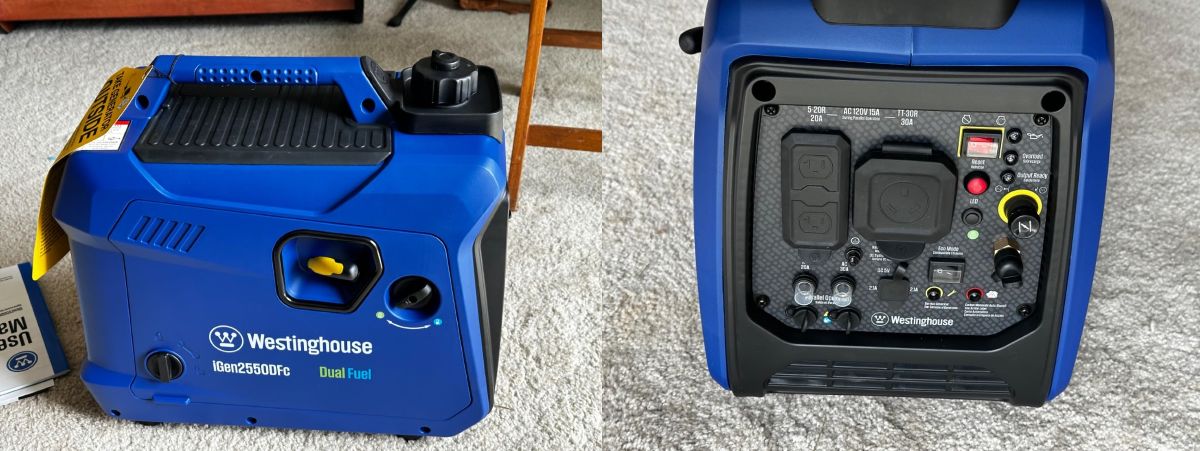
3. Westinghouse 2550 Portable Inverter Generator:
Why We Picked It
The Westinghouse iGen2550C is an ideal choice for anyone seeking a compact, quiet, and efficient inverter generator for home backup, camping, RV use, travel, or emergency readiness. It offers clean, stable power for sensitive electronics, is extremely easy to start, and provides excellent fuel efficiency in ECO mode. With dual-fuel options available, smart design features, and dependable performance across multiple real-world situations, it hits the sweet spot between portability and capability.
Pros
- Very quiet operation
- Starts easily on first pull or first try
- Clean inverter power safe for laptops, electronics, and appliances
- ECO mode provides excellent fuel savings
- Lightweight and easy to transport
- Works well on both gasoline and propane (dual-fuel models)
- Long runtime including multi-day use in the field
- Clear user manual and easy access to components
- Ideal for RVs, travel trailers, hunting trips, and small home loads
- Reliable performance once spark plug is upgraded if needed
- Great price for the quality and features
Cons
- Must check oil level before first use
- Rough idle on no-load, especially in ECO mode
- Not suitable for heavy appliances without soft-start (RV A/C units may require it)
- Occasional factory spark plug performance issues
- Limited wattage compared to larger inverter models
Who It’s For
- Campers, hunters, and RV owners who need quiet, portable power
- Homeowners wanting a small, fuel-efficient backup for fridges, lights, and electronics
- Travelers who want reliable portable power for tools and charging devices
- Users who prefer clean inverter output for sensitive equipment
- Anyone who values lightweight design and simplicity over high-wattage output
- People preparing for storms or short power outages
Helpful Review Insight
Users consistently praise this generator for its quiet operation, simple setup, and impressive power delivery for its compact size. Many noted that it starts easily, often on the first pull, and runs smoothly once oil and fuel are added. ECO mode protects fuel costs while still providing stable power for laptops, refrigerators, small tools, and lights.
For RV and camping use, reviewers pointed out that it can run essentials like microwaves, heaters, and camper lights with ease. One user ran it for three days while hunting, reporting around 10 hours per tank on gasoline and up to an estimated 30 hours on a 15-lb propane bottle.
Home users appreciated its ability to keep small refrigerators stable during outages, with one reviewer using just 2.1 liters of fuel for six hours while running a fridge alone. Another buyer noted it prevented thousands in potential food loss during multi-day power interruptions.
Some users mentioned that idle can feel rough without a load, especially in ECO mode, but that it smooths out once powering small appliances like heaters or pumps. A few encountered minor startup issues that were quickly resolved by replacing the factory spark plug with a quality NGK plug.
Other helpful tips from reviewers include:
- Check oil before first use to avoid low-oil shutdown.
- Use a soft start on RV air conditioners to prevent overload.
- Keep a properly sized propane bottle (10 to 15 lbs works well).
- Don’t overload the generator; stay within its rated wattage.
Overall, buyers describe the Westinghouse iGen2550C as a quiet, portable, well-designed little powerhouse that delivers reliable performance whether at home, on the road, or off the grid.
4. Champion Power Dual Fuel Portable Generator:
Why We Picked It
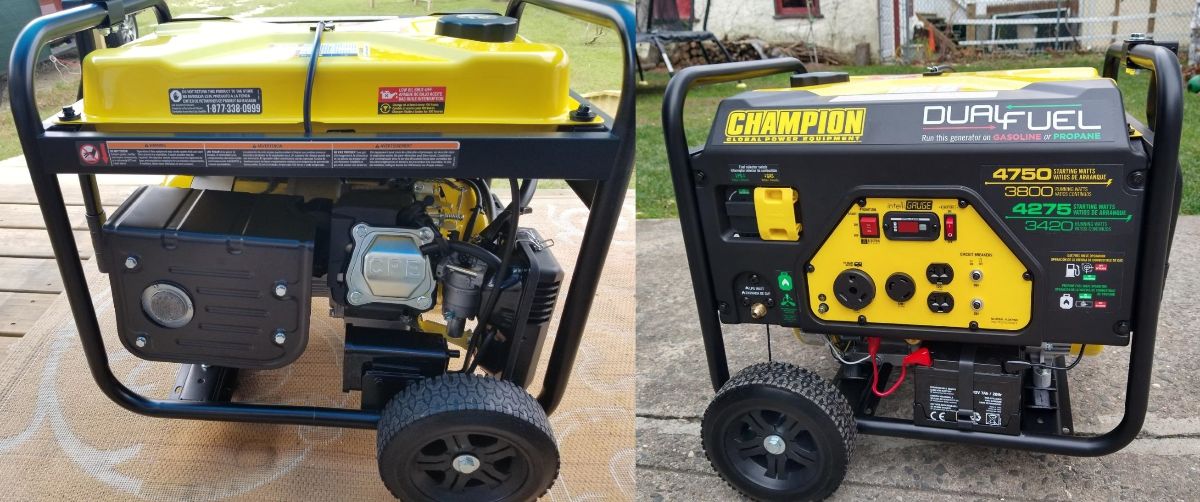
The Champion 76533 offers an outstanding balance of reliability, dual-fuel flexibility, RV readiness, and long-term durability. It has proven itself over years of ownership by many users, consistently starting easily on propane or gasoline and providing dependable power during outages, camping, and RV trips. Its ability to operate fully on propane without requiring battery power adds a level of redundancy and peace of mind that many generators lack. Whether for emergency backup or RV use, this model delivers dependable performance at a reasonable price.
Pros
- Starts easily with recoil or electric start
- Dual-fuel operation with complete propane independence
- Clean, stable power for RVs including air conditioners
- Excellent build quality and long-term reliability
- Very clear, well-written owner’s manual
- Wheels and handle make it easy to move
- Handles full RV loads including AC units
- Electric start is reliable even in cold weather
- Fuel-efficient when running on propane
- Proven performance during multi-day power outages
Cons
- Battery size is uncommon and replacements can be hard to find
- Generator cannot be recoil-started on gasoline without 12V power
- Oil change access and drain plug location can be messy without preparation
- No built-in battery voltmeter
- Requires external trickle charging for long-term battery health
Who It’s For
- RV owners who need a generator strong enough for air conditioners
- Homeowners preparing for storm season or multi-day outages
- Users who want redundancy: propane operation without needing battery power
- People who prefer propane for fuel stability and storage
- Anyone wanting a long-lasting, well-supported dual-fuel generator
- Buyers looking for a reliable mid-size portable generator for emergencies
Helpful Review Insight
Users consistently report that the Champion 76533 starts with remarkable ease, whether on propane or gasoline. Many appreciated that it could start on propane with just one pull of the recoil starter and that electricity from the battery is not required for propane operation. This design gives an added layer of redundancy during emergencies—if the battery fails, propane mode still works perfectly.
Real-world RV testing shows that the generator handles major loads, including RV air conditioners, without any issues. Homeowners echoed the same, noting that it maintained refrigerators, lights, fans, chargers, and more during multi-day outages. One owner ran it 8–12 hours per day during a three-day outage and praised its reliability, cold-weather starts, and quiet operation relative to its size.
A highly useful tip from experienced reviewers is to keep an eye on the battery voltage. Because the generator cannot recoil-start on gasoline without 12V power, users recommend monitoring battery health with a small voltmeter or trickle charger. One reviewer installed a $3 voltmeter at the power switch for instant feedback on charging performance and battery condition.
Regarding maintenance, some users mentioned the oil drain plug can be messy unless the generator is elevated. However, using the included funnel beneath the plug makes clean oil changes easy.
Long-term owners noted:
- The unit holds up well after years of storage
- No leaks or performance drops over long periods
- Fuel usage is reasonable, especially on propane
- Noise levels are acceptable and barely noticeable inside the home
Overall, reviewers repeatedly describe this generator as dependable, well built, and highly effective for both RV use and home emergencies. Many emphasized that it has paid for itself during major storms by preserving food, powering essentials, and providing comfort when the grid goes down.
5. DuroMax XP13000HXT 13,000-Watt 500cc Tri Fuel Portable Generator:
Why We Picked It
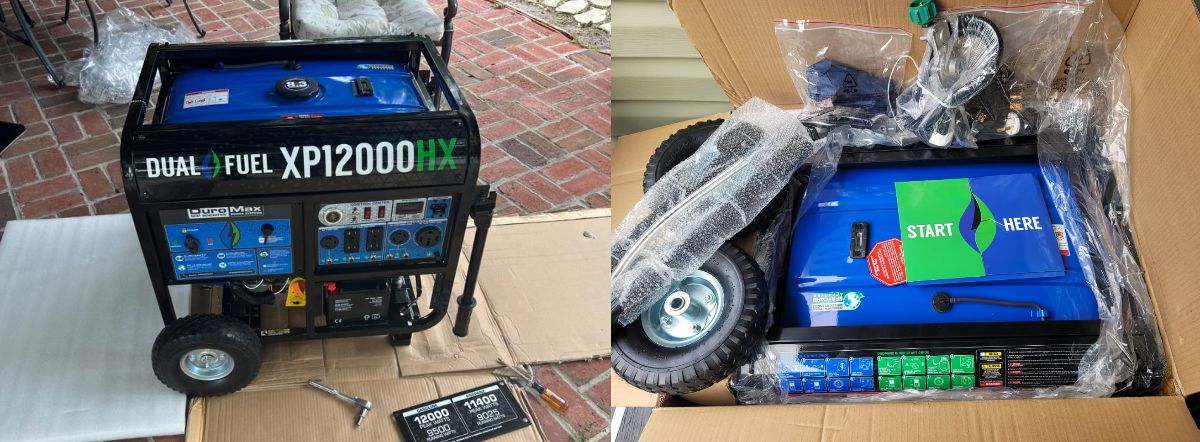
The DuroMax XP13000HXT stands out as one of the most capable tri-fuel portable generators for homeowners who want whole-home level backup power without spending the cost of a full standby system. With natural gas, propane, and gasoline options, plus a true 50-amp outlet and a heavy-duty 500cc engine, it provides the amperage needed for central air conditioners, furnaces, refrigerators, and household essentials. It offers a practical middle ground between $15,000 whole-home standby solutions and smaller portable generators that lack the power to run major appliances. For those preparing for long outages or wanting seamless natural-gas integration, this model delivers premium capability, durability, and value.
Pros
- True tri-fuel operation including natural gas, propane, and gasoline
- Strong 50-amp output capable of running central AC units
- Digital load meter makes monitoring usage easy
- Handles whole-home or multiple-appliance loads
- Excellent customer service with quick responses
- Durable build quality and long-term reliability
- Starts reliably on all fuel types
- Electric choke for automatic transition to run mode
- Includes long natural gas hose and full accessory set
- Good for extended runtimes and high-demand loads
Cons
- Heavy; requires effort to move despite included wheels
- Natural gas startup may require several attempts to prime the line
- Natural gas installation requires proper BTU supply and sometimes plumbing upgrades
- Supplied tools are minimal for assembly
- A bit louder due to its large open-frame design
- Selector switch can feel stiff until broken in
Who It’s For
- Homeowners wanting standby-like power without standby pricing
- Users who prefer natural gas for convenience and endless runtime
- Houses with AC units, furnaces, refrigerators, and multiple simultaneous loads
- DIY-savvy homeowners installing interlock or transfer switch setups
- Buyers preparing for multi-day outages, hurricanes, freezes, or extreme heat
- Anyone wanting maximum flexibility: natural gas at home, propane for backup, gasoline for emergencies
Helpful Review Insight
Buyers consistently praise the XP13000HXT for delivering true home-backup capability. Many chose it specifically for natural-gas use, noting that it provides a cost-effective alternative to a whole-home standby system while still running major appliances like central AC units. One reviewer tested it on a smaller AC system, dual refrigerators, computers, lights, ceiling fans, and network equipment, and it only showed about sixty percent load on the meter. Another user confirmed it effortlessly powered whole-house air conditioning, a water heater, and an electric stove when back-feeding through a 50-amp setup.
Several reviewers emphasized understanding natural-gas requirements. The generator can consume up to 225,000 BTUs per hour at full load, so a properly sized gas line is essential. Many homeowners found that 1/2-inch grill lines were insufficient and instead tapped into 3/4-inch or higher-capacity lines such as those used for pool heaters or furnaces. For others, once properly connected, startup was reliable; initial startup attempts sometimes took several cycles to prime the gas hose, but subsequent starts were smooth.
Users also noted:
- You must supply your own 10W-30 oil before the first run
- A trickle charger is highly recommended for keeping the starting battery healthy
- Assembly is easy but goes faster with your own tools
- Some fittings on the natural-gas hose may be extremely tight from the factory
- Electric choke automatically transitions to run mode after startup
- Customer service is responsive, sending missing parts quickly and providing maintenance guidance
Long-term owners reported years of trouble-free operation, with the generator performing flawlessly during summer heat waves, storms, and long outages. One reviewer ran his unit for fifteen continuous hours and praised its stability and strong output. Another owner with three years of use confirmed it still powers his entire home during outages without hesitation.
Overall, buyers describe the XP13000HXT as a powerful, dependable, tri-fuel workhorse that brings whole-home standby capability to a portable platform. For anyone who needs natural-gas compatibility, a 50-amp output, and long-term durability, this generator delivers exceptional performance and value.
6. Westinghouse 12500 Peak Watt Tri-Fuel Portable Generator:
Why We Picked It
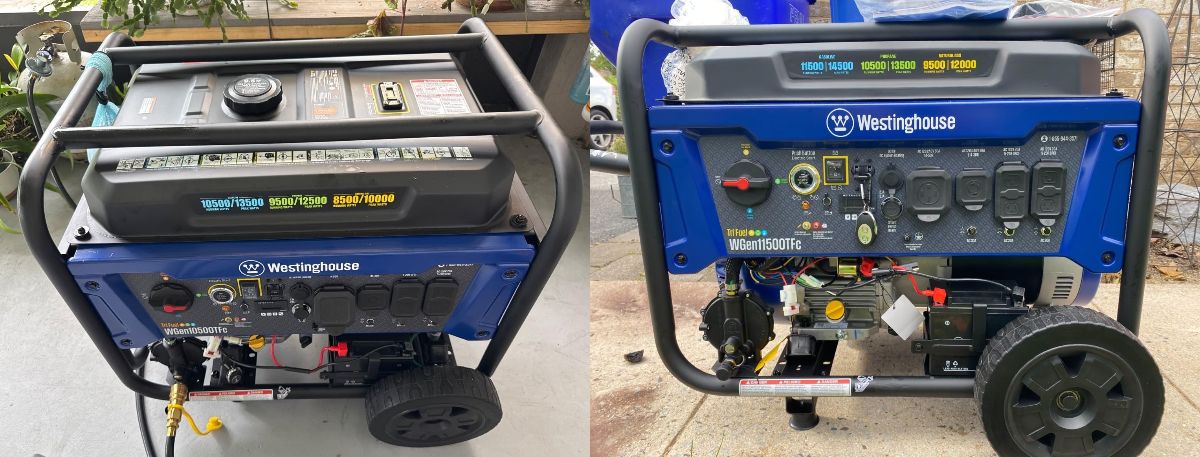
The Westinghouse 12,500-Watt Tri-Fuel Generator stands out as one of the most versatile and user-friendly whole-home portable backup systems on the market. With the ability to run on natural gas, propane, or gasoline, plus optional compatibility with the Westinghouse Smart Switch power module, this unit offers a level of convenience and automation that few portable generators can match. For homeowners who want reliable backup power without investing in a full standby generator, this model delivers impressive capacity, flexibility, and thoughtful engineering. It’s powerful enough for two-story homes, easy to start, straightforward to assemble, and built with Westinghouse’s proven quality control.
Pros
- Tri-fuel operation (natural gas, propane, gasoline) for maximum flexibility
- Optional Smart Switch allows automatic start and transfer for essential appliances
- Electric and remote start options
- Capable of running large households and high-amperage loads
- Includes both 30-amp and 50-amp hookups
- High build quality with strong QC and durable components
- Easy assembly with clear instructions
- Starts easily out of the box, even on propane
- High power output for the price
- Good customer service responsiveness
- Clean operation on propane and natural gas
Cons
- Remote start system requires the battery switch to be toggled, limiting true “remote” functionality
- Heavy; requires wheels for maneuvering
- Some users may experience harder starting on propane depending on setup or supply
- A few buyers reported missing or damaged parts on arrival
- Loudness typical of large open-frame generators
- Output derates on propane and natural gas, so proper sizing is important
Who It’s For
- Homeowners wanting near-standby performance without paying for a full standby installation
- Users who want an automatic backup option via the Smart Switch module
- Households with multiple appliances, 240V loads, or whole-home power needs
- Buyers who prioritize fuel flexibility and long-term reliability
- DIY or preparedness-minded homeowners who want a generator ready for outages, storms, wildfires, or extended blackouts
- Anyone needing a 50-amp capable tri-fuel platform at a reasonable price
Helpful Review Insight
Reviewers consistently praise the Westinghouse 12,500-Watt Tri-Fuel for its reliability, strong output, and exceptional versatility. The standout feature is its compatibility with the Westinghouse Smart Switch, allowing automatic start and transfer for essential appliances without needing an electrician—something rarely found on portable generators.
Most users report easy assembly, smooth electric starting, and dependable operation on gasoline, propane, and natural gas. Many successfully powered major household loads, including refrigerators, lights, and even central AC depending on setup. Build quality, included accessories, and responsive customer service were also noted as positives.
Common drawbacks mentioned were the limited functionality of the remote start (battery switch must be toggled), occasional difficulty starting directly on propane, and the generator’s heavy weight. A few customers received units missing small parts, though these were typically resolved quickly.
Overall, owners describe it as a powerful, well-built, and highly flexible home backup option that delivers excellent value, especially with tri-fuel capability.
Considerations For Choosing Portable Generators:
When choosing a portable generator, consider the following key factors:
Power Requirements: Assess the wattage needed for your devices.
Fuel Options: Opt for dual or tri-fuel options for flexibility.
Runtime: Look for generators with extended runtimes.
Start Options: Choose models with electric or remote start for convenience.
Portability: Consider weight and design, especially for outdoor use.
Noise Level: Prioritize generators with quieter operation.
Safety Features: Check for low oil shutdown for engine protection.
Compliance: Ensure generators meet environmental standards.
Durability: Assess the engine type and overall build quality.
Support and Warranty: Consider customer service and warranty terms.
Specific Use Cases: Tailor your choice to your intended applications.
Budget: Balance features with cost for optimal value.
Frequently Asked Questions:
1. What brand is the best portable generator?
A: Determining the best brand depends on individual preferences and needs. Notable brands include Westinghouse, DuroMax, Generac, Champion, and Jackery, each offering a range of generators with distinct features.
2. What kind of generator is best for home use?
A: For home use, a generator with sufficient wattage, such as the Westinghouse 12500 Watt Dual Fuel Portable Generator, is recommended. Dual-fuel options, extended runtime, and safety features make it ideal for backup power during outages.
3. Which is better, inverter, or portable generator?
A: The choice between an inverter and a portable generator depends on your needs. Inverters are more fuel-efficient, produce cleaner power, and are quieter, making them suitable for sensitive electronics. Portable generators, on the other hand, offer higher power output and are often more versatile.
4. How much is a good portable generator?
A: The cost of a portable generator varies based on features, brand, and power output. Entry-level models may start around $300, while high-capacity generators with advanced features can range from $800 to $2,000 or more.
5. What are the top 5 portable generators?
A: The top 5 portable generators in 2024 include the Westinghouse 12500 Watt Dual Fuel, DuroMax XP13000EH, Westinghouse 2550 Portable Inverter, Champion Power Dual Fuel, and Generac GP8000E. These generators offer a mix of power, versatility, and features.
6. What are the disadvantages of a portable generator?
A: Portable generators have limitations, including noise levels, emissions, and the need for fuel storage. They may not be suitable for extended use or continuous power needs. Additionally, they lack the automatic transfer switch found in standby generators, requiring manual setup during power outages.
7. Which generator is best for AC?
A: Generators with higher starting watts, such as the DuroMax XP13000EH or Generac GP8000E, are suitable for powering air conditioners. Consider the AC’s starting wattage and the generator’s surge capacity to ensure compatibility.
8. Which is cheaper, inverter, or generator?
A: Inverters tend to be more expensive upfront due to their advanced technology. However, they offer fuel efficiency and quieter operation, potentially leading to lower operational costs over time. Portable generators may have a lower initial cost but can be less fuel-efficient and louder. The choice depends on your priorities and budget constraints.